Tesla vs Edison: the war that decided how the world gets power
In the 1880s two systems fought to electrify America. The loser launched a smear campaign — and still lost.

Thomas Edison's company had built its business on direct current, or DC. It worked, but it could not travel far — a power station was needed roughly every mile.
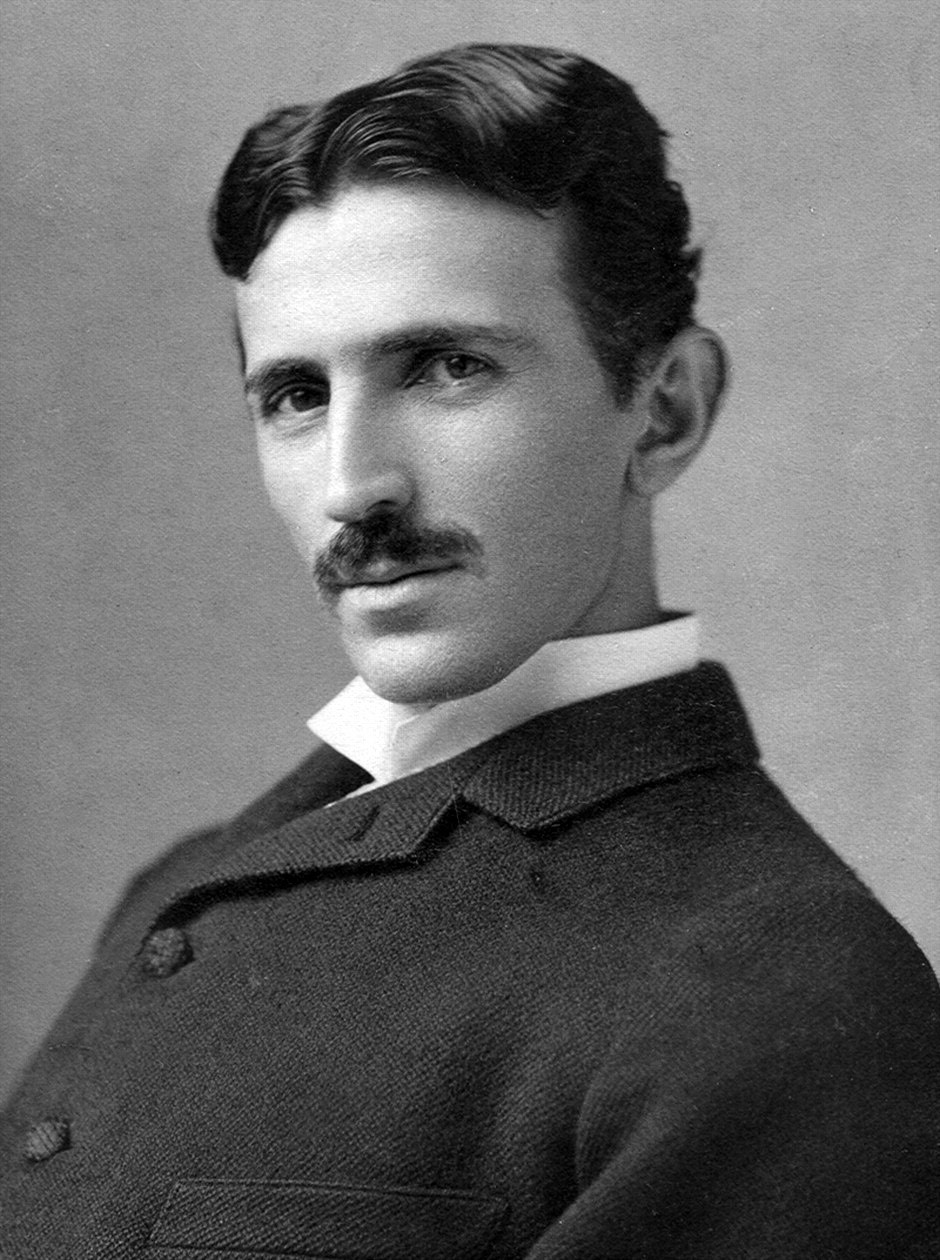
Nikola Tesla, a Serbian-American engineer who had briefly worked for Edison, believed in alternating current, or AC, which could be sent across long distances at high voltage. George Westinghouse bought his patents.
What followed became known as the War of the Currents. Edison's side warned that AC was deadly, and public demonstrations electrocuted animals to make the point.
The turning point came in 1893, when Westinghouse won the contract to light the Chicago World's Fair. Soon after, AC was chosen to harness Niagara Falls to power distant cities.
Today almost every power grid on earth runs on alternating current. Tesla died poor, but his idea won. Sometimes being right is not enough in the moment — it only becomes obvious in time.
Sources
- Thomas P. Hughes, Networks of Power (1983)
- W. Bernard Carlson, Tesla: Inventor of the Electrical Age (2013)
“The present is theirs; the future, for which I really worked, is mine.”Nikola Tesla
Read real Nikola Tesla quotes, with sources →
One real quote from history, every morning.
Kleos sends you a verified quote, the story behind it and a wallpaper, every day. Free to start. Join the waitlist for 1 month of Premium free at launch.
Join the waitlistMore about Nikola Tesla
More science stories


